Glenmuir cottage a tranquil highland retreat in the heart of Scotland


Dornoch - the perfect place to relax

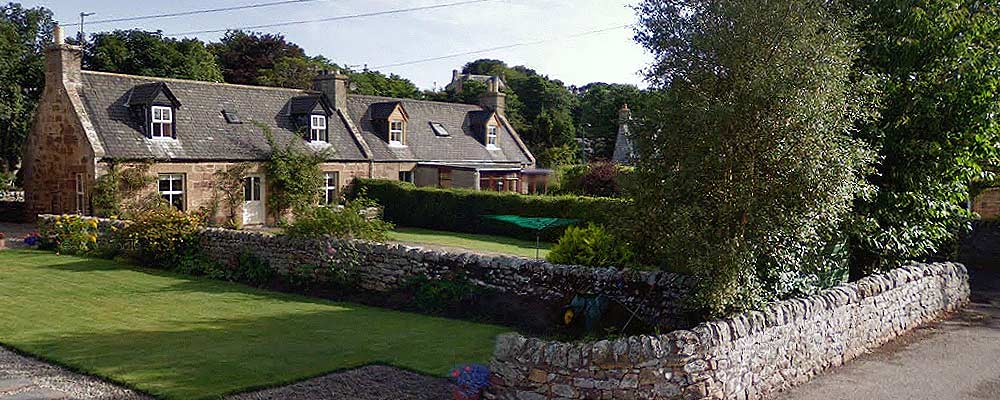
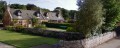
GLENMUIR COTTAGE is a 4 star self catering cottage in Dornoch in the Highlands of Scotland

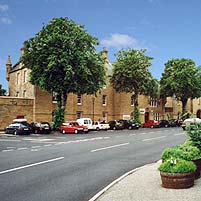
...and is centrally located in the ancient and historic town of Royal Dornoch, Sutherland, Scotland. A short walk from your accommodation takes you into the pretty town with its shops, restaurants, antiques, coffee shops and the 13th Century Cathedral.

Dornoch is situated in the north-east of Scotland on the beautiful Dornoch Firth and has a superb, sandy beach, walks and hill climbing nearby, trout and salmon fishing, bird-life, and of course the world famous championship Royal Dornoch Golf Club, only a six minute walk from your lodgings at the cottage. There are many other golf courses in the vicinity such as Skibo, Tain and Golspie with Strathpeffer, Muir of Ord, Fortrose, Nairn, Inverness and Durness golf clubs slightly further afield.

Glenmuir Self Catering Cottage is a typical 19th Century Highland house with a mature, well-tended sunny and secluded front garden and patio / seating area, with the courtyard behind this east highland luxury 4 star rental cottage paved for cars, etc.

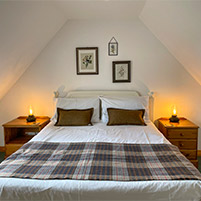
The four star Cottage has sleeping accomodation for up to six people with a double and single bed in each of the two bedrooms. A cot is available on request. The bedrooms are furnished with quality bedding and carpets. There is a shower room upstairs plus good-sized toilet on the ground floor.

Interestingly Dornoch boasts a mild climate with above average sunshine and low rainfall which adds to it being favourably placed for touring the north of Scotland from Inverness, about 45 miles south, or to the north and westerly points of Caithness and Sutherland such as Toungue and Kyleskue. Nearby attractions include the Glenmorangie Distillery and Anta Pottery in Tain and Dunrobin Castle at Golspie.


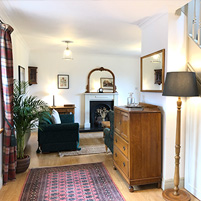
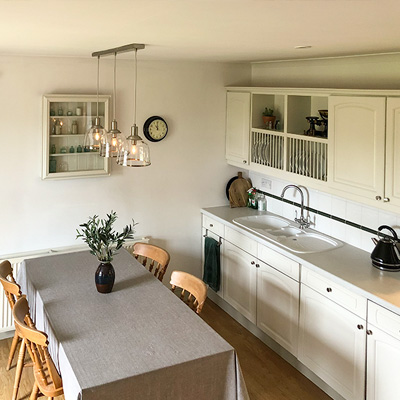
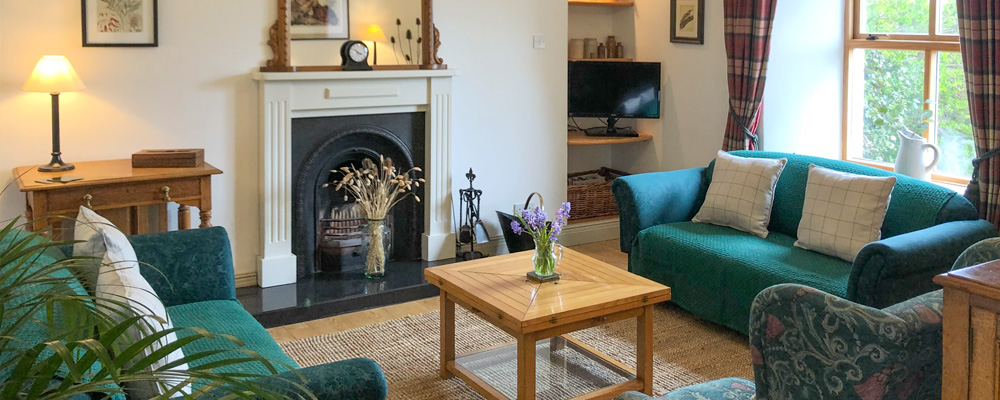
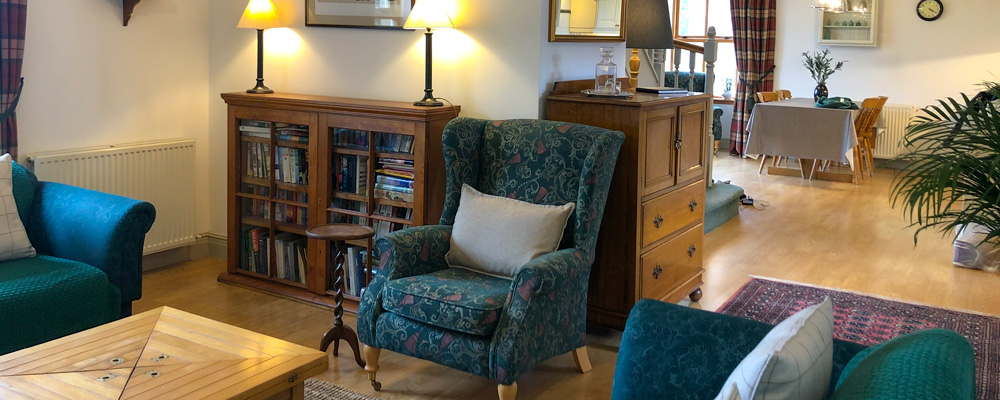
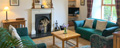
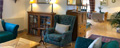
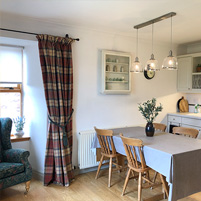
The open plan sitting room and dining kitchen are beautifully equipped with antique and traditional furnishings, comfortable and stylish, with rugs and polished wooden floors and an open fire for added cosiness. The cottage has full central heating. The sitting room and the bedrooms each have a television and video, and there are also CD and cassette players.

The well-designed and attractive kitchen provides high quality electric hob and oven,dishwasher, fridge with freezer compartment, washing machine and microwave.

There is a utility / boiler room with facilities for drying and storage for golf clubs, etc, and an outside store for coal and logs for the fire. A picnic basket for your use, a standard welcome pack, electricity, central heating, linen and towels are all included in the weekly rate.

Welcome to Glenmuir | The Cottage | Dornoch Golf Club | Around Dornoch | Getting in Touch and Prices |


Royal Dornoch Golf Club
Despite its northerly latitude, some 45 miles North of Inverness and nearly 200 miles from Edinburgh, improvements to roads help Royal Dornoch to continue to be one of the most popular golf courses in Scotland.

So well is it regarded that magazine polls across the world regularly have it in their top twenty, it is well worth the extra miles it takes to get there. Old Tom Morris originally laid the course out in 1891 and John Sutherland - Dornoch's club secretary from 1882 through to 1935 - made subsequent changes. After World War II the course was again considerably altered by George Duncan who designed five new holes: Nos 7 through to 11.

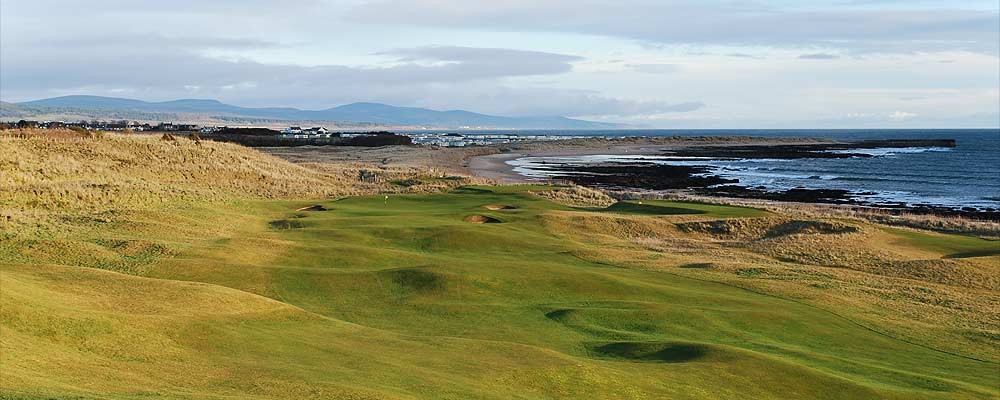
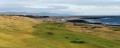
The opening hole at Royal Dornoch, a simple par 4, is no indication of the joy - and trouble - to come. It is not until golfers walk over the headlands to the third tee that they get a sense of this striking golf course. Wondrous swards of fair way and green, with clusters of players dotting the beach-front, unfold a mile in each direction. The embankments of the old dunes on the landward side of the course, from late April until early June, are a carpet of flaming yellow gorse.

The course is just over 6,500 yards, but this is no reflection on the degree of difficulty to be found on many holes. It is classic links with the first 8 holes following the natural slants and humps of old dune embankments while the rest flank the sandy beaches of Dornoch Bay. Raised or sloping greens are characteristic as well as elevated tees so the target is well presented although rarely easy to reach. Dornoch, perhaps more than most, is a thinking golfers course where it is not enough to simply keep the ball on the fairway. A position has to be sought on most holes where the green can be accessed to your advantage.

Founding member and honorary president, American Society of Golf Course Architects member, World Golf Hall of Fame Ross was born in 1872 in the north Scottish coastal town of Dornoch. There on crumpled dunesland, he grew up playing one of the world's purest links, Royal Dornoch. As a young man he took up "the keeping of the green." After a year of apprenticeship at St. Andrews under the tutelage of 4-time British Open champion "Old" Tom Morris, he returned to his native Dornoch. In those days, there was no rigid division of labour for golf professionals, so Ross became adept not only at maintaining the grounds but also as a player and club maker.

DONALD ROSS was of common stock, making an adequate if unspectacular living. But all that changed when an American professor on golf pilgrimage to the sport's holy land invited him to come to the New World to help spread the game's gospel. Ross arrived in 1899 to build and run the Oakley Golf Club in the Boston area. The next year, he landed an assignment with the The Tufts family on a property in North Carolina's sandhills called Pinehurst.

Eventually, he designed and (re)built four courses at the Pinehurst resort, none with more love and care than the No. 2 layout. Drawing upon his extensive background in turfgrass management, he revolutionized southern greenkeeping practices when he oversaw the transition of the putting surfaces at No. 2 from oiled sand to Bermuda grass. The work was done just in time for the 1935 PGA Championship. The result was devilishly quick domed greens and a sense of impending doom for any wayward shots.

GOLF LINKS IN NORTH EAST SCOTLAND

Dornoch is situated in the north-east of Scotland on the beautiful Dornoch Firth. Heading north follow the A9 towards Wick and cross the Dornoch Bridge just north of Tain. A mile further on turn right and follow the signs for Dornoch. Inverness has a modern well equipped Airport where car hire can be arranged.
There is also a fast and reliable bus service from Inverness to Dornoch should you require it.
If you need any special arrangements please feel free to contact us and we will be only too pleased to help.

GETTING IN TOUCH & BOOKINGS
Kenny and Margaret MacGruer
62 Old Edinburgh Road,
Inverness IV11 1DT
Tel: 01463 238892

You may also be interested to know that we also have Four Star bed and breakfast accommodation at our home, Highfield House for up to six persons available. The property is situated in a central location of Inverness and is available at a generously discounted rate to guests renting Glenmuir. Simply call or email if you wish to arrange a stop-over with us on your way to or from Glenmuir.

BIOGRAPHY OF DONALD ROSS
During his summers, Ross started designing and building courses throughout New England. Eventually, his practice spread into the Midwest and down the Southeast coast. In association with design assistants J.B. McGovern and Walter Hatch, Ross maintained a summer office in Little Compton, Rhode Island and satellite offices in North Amherst, Massachusetts, and Wynnewood, Pennsylvania.
Of all the courses that bear Ross' name, either as original designs or as renovation projects, he probably never even saw a third of them, and another third he visited only once or twice. Given the constraints of train and car travel in those days, repeat visits were difficult to arrange. Though Ross was a voracious traveler, he did much of his design work from his home in a cottage behind the third green at Pinehurst. There he worked from topographic maps, drew up blueprints, and wrote simple but sharply-worded instructions that his construction crew knew how to implement.

Ross had a genius for sound routings, with very little walking required from one green to the next tee. He would commonly route his short par-4s on uphill ground. Other trademarks included greens that invited run-up shots, but with deep trouble over the green - usually in the form of fallaway slopes - to punish the overly bold golfer. Ross was also not averse to placing cross bunkers in play to punish the topped shot - off the tee, or some 50 yards short of the green. Sadly, a great number of these hazards have been taken out of play over the years in the misguided pursuit of "ease of maintenance" or "making the course more playable."

Regrettably, many of Ross' original works have deteriorated over time - or worse yet, been effaced by subsequent generations of less sophisticated "re-designers." Among the victims of such a heavy-handed efforts have been Aronmink GC (1928) outside Philadelphia (where Robert Trent Jones-Roger Rulewich created all new bunkers), Inverness (1920) in Toledo, Ohio, and Oak Hill (1923) in Rochester, New York (at both of which, Tom Fazio created several new holes that didn't fit).

Ross was a founding member and first president of the American Society of Golf Course Architects, a group that formed at Pinehurst in December 1947. This year, a manuscript he drafted in 1914 called "Golf Has Never Failed Me" at long last will be published.

SkiboTainGolspieBroraStrathpefferMuir of OrdNairn
FortroseNairn DunbarInvernessDurness